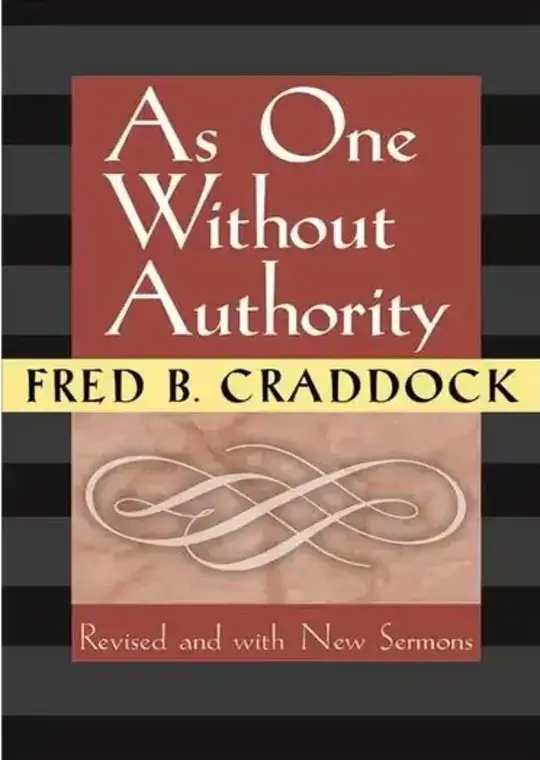
Fred B. Craddock’s As One Without Authority is a landmark work in modern homiletics that reshaped the way many preachers think about sermon construction and delivery. Rather than relying on the traditional deductive approach, in which the main idea is presented at the beginning and supported throughout the sermon, Craddock advocates an inductive style that allows listeners to discover the sermon’s message as it unfolds. His approach emphasizes engaging the congregation as active participants in the preaching event rather than passive recipients of information.
Craddock argues that preaching should mirror the way people naturally experience and process truth. Instead of beginning with conclusions, the preacher guides listeners through the biblical text, inviting them to reflect, question, and ultimately arrive at the sermon’s central claim. This method encourages greater listener involvement and often results in sermons that are more memorable and personally meaningful. Throughout the book, Craddock stresses that preaching is not merely the transfer of information but an event in which God speaks through Scripture to transform lives.
One of the book’s greatest strengths is its fresh perspective on communication. Craddock challenges preachers to think carefully about how sermons are heard as well as what they say. His emphasis on imagination, narrative, and listener engagement has influenced generations of pastors and has broadened the field of homiletics beyond rigid sermon formulas. His writing is thoughtful, insightful, and deeply pastoral, encouraging preachers to communicate biblical truth in ways that connect with the experiences of their congregations.
Another strength is Craddock’s appreciation for the relational nature of preaching. He reminds readers that effective sermons are shaped not only by sound exegesis but also by an understanding of the congregation’s questions, struggles, and context. This emphasis encourages sermons that are both biblically faithful and pastorally sensitive.
One limitation is that Craddock’s inductive approach may not fit every biblical passage or ministry setting. Some readers may also find that delaying the sermon’s main idea can reduce clarity if not handled carefully. For this reason, many contemporary preachers combine Craddock’s insights with more traditional expository methods rather than adopting his model exclusively.
Overall, As One Without Authority remains a classic work in preaching. Craddock’s emphasis on engaging listeners, honoring the biblical narrative, and viewing preaching as a transformative encounter continues to influence homiletics today. I highly recommend this book to seminary students, pastors, and experienced preachers who want to deepen their understanding of how sermons communicate God’s truth with both faithfulness and creativity.