Point Student Completes 100-Mile Race

Clemens Budde ’29, of Warstein, Germany, recently competed in a 100-mile ultra marathon in Flovilla, Georgia. We sat down with him to discuss his experience during training and on race day.

What originally drew you to this distance? Was it a specific challenge you wanted to overcome or a curiosity about your own limits?

I decided to run 100 miles last summer after I finished a 38-mile obstacle race, which at that point had been the most challenging thing I had ever done. After finishing it with a good time, I realized that my body is capable of so much more than I even thought was possible, so I was looking for the next big challenge. After looking into many different races and listening to stories like David Goggins’, who described his first 100-mile race as the hardest thing he had ever done, I was convinced that this would be my next step, and I signed up for the Bootlegger 100 a few months after.

How have you managed to balance training with your classes, athletics and social life?

Balancing my personal workouts in preparation for the race with my athletics, academics, and my social life was actually one of the hardest parts on my journey. I signed up for the race in September of 2025 and started training for it right away, which meant I had to get my runs in on top of being in the middle of soccer season. Unfortunately, my body did not adapt too well to this additional stressor, and I experienced several overtraining injuries. While the spring is our off-season in soccer, and I therefore should have been able to focus on my running more, it presented me with two different challenges. Firstly, the classes I am now taking are definitely more challenging than the ones I took in fall, so I needed to plan more time for studying, and secondly, I had just made new friends and connections at a church in Auburn, which required me to put more time away for that as well in order to see them and go to church there, which is a great pleasure. In order to maximize my time, I set up a daily routine and schedule, which included me waking up at 4 a.m. in order to have enough time to run, workout, study, go to class, go to practice, do my daily chores, and still see my friends. My workout plan consisted of four runs each week: two short runs of 10 to 12 miles during the week and a long run of somewhere in the range of 25 to 50 miles on Saturdays, followed by a recovery run on Sundays. On top of that, I would go work out in the gym at least three times per week, go swimming two to three times, and had three days per week of soccer practice.

What did your hardest week of training look like, and was there a specific moment when you realized you were actually ready for this?

During my peak week of training, which was four weeks prior to race day, I ran 110 miles. I split that up into three marathons, a 10-mile run, and a 20-mile run. There was a moment after the first marathon that week where I started to get a lot of knee pain and I began to tell myself that maybe it would be a better idea to take it easier and not finish the peak week so I could be rested for race day and show up without any aches or injuries. Fortunately, I was able to silence that inner voice and push through the week because I realized that deep down I was actually just trying to procrastinate the work that I had given myself. When I finally finished the week and saw how much I was able to run, I actually realized that no matter what, I would be able to finish the race.

Do you have a specific mantra or a mental strategy you plan to use when things get difficult? 

During my runs I listened to and finished the audiobooks of David Goggins, Can’t Hurt Me, and Marcus Luttrell’s, Lone Survivor. When it comes to mantras that I am telling myself, there are many Bible verses that got stuck in my head while reading scripture that really fit what I am going through at times. The biggest ones for me include James 1:2-4, Philippians 4:13, and Mark 10:27. In general, it has become a great mental strategy to pray during my runs because not only does it distract me from what I am actually doing in the moment, but most importantly it teaches me to go to God first when facing struggles and hardship and sharing my heart with Him.

Who was on your support team for the weekend, and what specific role did they play in keeping you going?

I did not have a designated crew or support team throughout the race; however, I did have a friend of mine from Missouri who came to the race in order to run the 50-mile version. He and his wife were always there for me and helped me with anything I had going on, whether that was stuff that I needed or mental support because I was not doing well. Seeing him finish the 50 miles in 12 hours was truly a great inspiration for me to keep going and not to quit. He definitely helped me a lot during this race, probably more than he knows, and I will be forever grateful!
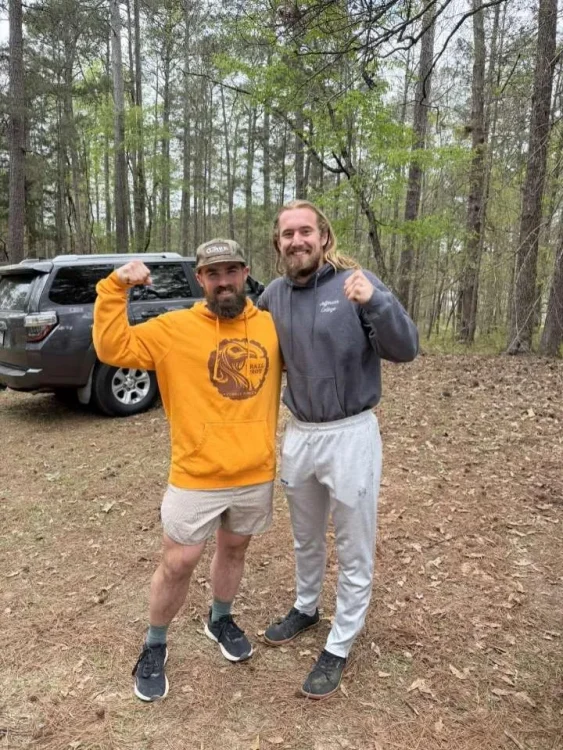
When you imagined crossing the finish line, what was the first thing you wanted to do?

When I arrived at the race location, I saw that there was this beautiful lake that we would be running around, and so the first thing I wanted to do after crossing the finish line was to jump in there. However, as I got deeper into the race I cared less and less about what I was going to do after I finished, and just cared about actually crossing the finish line. In the end, when I finished it took me a good minute to realize that I actually did it, so I was just standing there going through all sorts of different emotions at the same time. Afterwards, I honestly did not really care what I did, I was just happy that I finally got to the point of finishing my first 100-mile race.

Has the process of training for an ultra changed the way you approach your academic challenges or your perspective on “stress”?

Training for my race actually had a lot of similarities to my academic journey, both literally and figuratively. In both realms, we often tend to overcomplicate things and try to look for an “easy way.” In the end it all comes down to how badly you want to reach your goal. Because, almost every time, we know that the uncomfortable and exhausting thing is the very thing that needs to be done in order to get closer to your goal. When it comes to stress, I realized that the majority of stress I was experiencing was actually self-inflicted. Running, or working out in general, was actually a great tool for me to overcome this stress, not only because exercise lowers your body’s cortisol, but also because I was able to use that time to pray and bring my problems to God first, which helped me to get a lot of answers and to overcome my worries.

What is the biggest lesson this journey has taught you about yourself that has nothing to do with running?

There are three main takeaways that I was able to get from my running journey that are applicable to any realm of life. First, you need to have a goal. This goal should be as specific as possible so that you can visualize it and know exactly the steps you need to take in order to get closer to your goal. Second, you need to work toward that goal with all your heart. You will only get as much out of something as you put in. Third, you cannot reach that goal just by yourself. No matter how strong or smart you think you are, there will always come a time where you need help to get to your goal.
Published
April 10, 2026
Share

Clemens Budde ’29, of Warstein, Germany, recently competed in a 100-mile ultra marathon in Flovilla, Georgia. We sat down with him to discuss his experience during training and on race day.

What originally drew you to this distance? Was it a specific challenge you wanted to overcome or a curiosity about your own limits?

I decided to run 100 miles last summer after I finished a 38-mile obstacle race, which at that point had been the most challenging thing I had ever done. After finishing it with a good time, I realized that my body is capable of so much more than I even thought was possible, so I was looking for the next big challenge. After looking into many different races and listening to stories like David Goggins’, who described his first 100-mile race as the hardest thing he had ever done, I was convinced that this would be my next step, and I signed up for the Bootlegger 100 a few months after.

How have you managed to balance training with your classes, athletics and social life?

Balancing my personal workouts in preparation for the race with my athletics, academics, and my social life was actually one of the hardest parts on my journey. I signed up for the race in September of 2025 and started training for it right away, which meant I had to get my runs in on top of being in the middle of soccer season. Unfortunately, my body did not adapt too well to this additional stressor, and I experienced several overtraining injuries. While the spring is our off-season in soccer, and I therefore should have been able to focus on my running more, it presented me with two different challenges. Firstly, the classes I am now taking are definitely more challenging than the ones I took in fall, so I needed to plan more time for studying, and secondly, I had just made new friends and connections at a church in Auburn, which required me to put more time away for that as well in order to see them and go to church there, which is a great pleasure. In order to maximize my time, I set up a daily routine and schedule, which included me waking up at 4 a.m. in order to have enough time to run, workout, study, go to class, go to practice, do my daily chores, and still see my friends. My workout plan consisted of four runs each week: two short runs of 10 to 12 miles during the week and a long run of somewhere in the range of 25 to 50 miles on Saturdays, followed by a recovery run on Sundays. On top of that, I would go work out in the gym at least three times per week, go swimming two to three times, and had three days per week of soccer practice.

What did your hardest week of training look like, and was there a specific moment when you realized you were actually ready for this?

During my peak week of training, which was four weeks prior to race day, I ran 110 miles. I split that up into three marathons, a 10-mile run, and a 20-mile run. There was a moment after the first marathon that week where I started to get a lot of knee pain and I began to tell myself that maybe it would be a better idea to take it easier and not finish the peak week so I could be rested for race day and show up without any aches or injuries. Fortunately, I was able to silence that inner voice and push through the week because I realized that deep down I was actually just trying to procrastinate the work that I had given myself. When I finally finished the week and saw how much I was able to run, I actually realized that no matter what, I would be able to finish the race.

Do you have a specific mantra or a mental strategy you plan to use when things get difficult? 

During my runs I listened to and finished the audiobooks of David Goggins, Can’t Hurt Me, and Marcus Luttrell’s, Lone Survivor. When it comes to mantras that I am telling myself, there are many Bible verses that got stuck in my head while reading scripture that really fit what I am going through at times. The biggest ones for me include James 1:2-4, Philippians 4:13, and Mark 10:27. In general, it has become a great mental strategy to pray during my runs because not only does it distract me from what I am actually doing in the moment, but most importantly it teaches me to go to God first when facing struggles and hardship and sharing my heart with Him.

Who was on your support team for the weekend, and what specific role did they play in keeping you going?

I did not have a designated crew or support team throughout the race; however, I did have a friend of mine from Missouri who came to the race in order to run the 50-mile version. He and his wife were always there for me and helped me with anything I had going on, whether that was stuff that I needed or mental support because I was not doing well. Seeing him finish the 50 miles in 12 hours was truly a great inspiration for me to keep going and not to quit. He definitely helped me a lot during this race, probably more than he knows, and I will be forever grateful!

When you imagined crossing the finish line, what was the first thing you wanted to do?

When I arrived at the race location, I saw that there was this beautiful lake that we would be running around, and so the first thing I wanted to do after crossing the finish line was to jump in there. However, as I got deeper into the race I cared less and less about what I was going to do after I finished, and just cared about actually crossing the finish line. In the end, when I finished it took me a good minute to realize that I actually did it, so I was just standing there going through all sorts of different emotions at the same time. Afterwards, I honestly did not really care what I did, I was just happy that I finally got to the point of finishing my first 100-mile race.

Has the process of training for an ultra changed the way you approach your academic challenges or your perspective on “stress”?

Training for my race actually had a lot of similarities to my academic journey, both literally and figuratively. In both realms, we often tend to overcomplicate things and try to look for an “easy way.” In the end it all comes down to how badly you want to reach your goal. Because, almost every time, we know that the uncomfortable and exhausting thing is the very thing that needs to be done in order to get closer to your goal. When it comes to stress, I realized that the majority of stress I was experiencing was actually self-inflicted. Running, or working out in general, was actually a great tool for me to overcome this stress, not only because exercise lowers your body’s cortisol, but also because I was able to use that time to pray and bring my problems to God first, which helped me to get a lot of answers and to overcome my worries.

What is the biggest lesson this journey has taught you about yourself that has nothing to do with running?

There are three main takeaways that I was able to get from my running journey that are applicable to any realm of life. First, you need to have a goal. This goal should be as specific as possible so that you can visualize it and know exactly the steps you need to take in order to get closer to your goal. Second, you need to work toward that goal with all your heart. You will only get as much out of something as you put in. Third, you cannot reach that goal just by yourself. No matter how strong or smart you think you are, there will always come a time where you need help to get to your goal.
Search

Online Programs

Point University - On-Campus Programs
Point offers more than 25 in-demand fully online programs that are both affordable and flexible, so you can learn on your own schedule from the convenience of your own home – or from anywhere in the world.
Explore

Popular Online Programs

A.A.
Prepare for a career in high-demand fields, spanning every area of commerce.
A.A. / B.S.
Be equipped to work with young children in a variety of settings, preparing activities and environments that foster physical, social, emotional, spiritual, and cognitive development.
B.S.W
Learn to effect positive change and improve the wellbeing of individuals, families, communities, organizations, and the human population as a whole.

On-Campus Programs

Point University - On-Campus Programs
Located in West Point, Georgia, Point University offers students a safe, vibrant atmosphere for them to build a Christ-centered community while earning their degree.
Explore
A.A.
Prepare for a career in high-demand fields, spanning every area of commerce.
B.A. / B.S.
Develop your spiritual gifts, strengthen your faith and enhance your knowledge of Christian principles.
Our counseling degree provides a solid foundation for understanding people and the various ways to help them.